
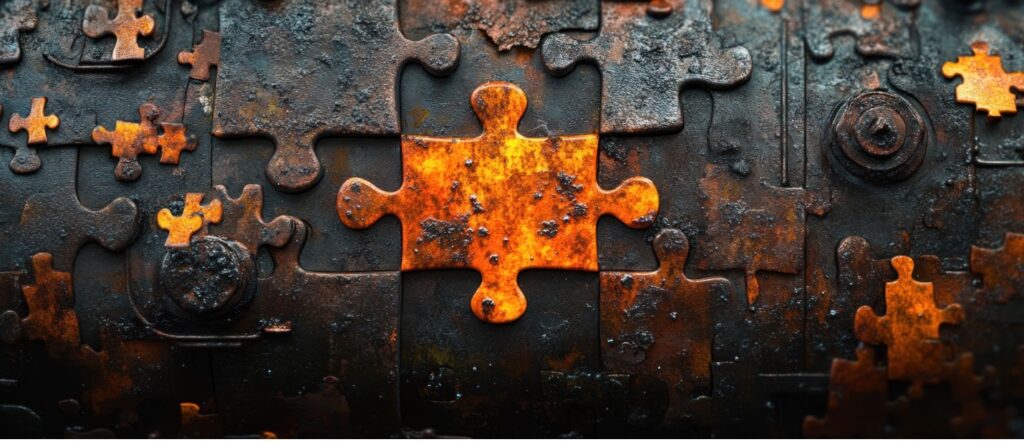
When a program hits the wall—schedules slip, test sorties ground, funding needs jump, problems cascade—the knee jerk is unanimous: bring the team together. Rally the troops. Increase communication. Present a unified front.
That instinct is wrong. In fact, it may be the single most damaging decision a leader makes in a crisis.
The assumption that cohesion solves complex problems is one of the most persistent and costly myths in program management and organizational leadership. Irving Janis identified it more than fifty years ago—documenting how cohesive teams under pressure systematically abandon critical individual judgment in favor of unanimity.¹
More recently, researchers at ETH Zurich proved experimentally that even mild exposure to what others think narrows the diversity of expert estimates without improving accuracy.² The group converges. The truth gets pushed to the fringe. And everyone in the room grows more confident despite being no more correct. Daniel Kahneman, Nobel Laureate, put it plainly: individual experts must work independently before any group deliberation occurs. Group discussion introduces noise—the contamination of sound judgment by social conformity.³
Expertise, contaminated with group opinion, is no longer expertise.
I watched this play out during a development test program for a new avionics suite on a critical strategic airframe. The program hit a hard stop. Test sorties were grounded. The instinct in the room was to convene— bring everyone together, work the problem together.
We did the opposite.
A tiger team of ten people—experts across five distinct disciplines—was given control of the test program. Each member was isolated within their lane. Communication lines were restructured and segregated. No cross-talk. No shared assessments until each expert had developed their own independent analysis. The rule was explicit: the broader team would not reconvene until the problem was pinpointed, isolated, and resolved.
It cost several weeks and millions of dollars in delays but, ultimately, prevented what would have been a multi-million-dollar fleet-wide operational failure that would have otherwise put the mission, and the lives dependent on it, at peril.
The lesson here is not that teams should avoid working together, rather that teams need to be architected for both modes—cohesion and disintegration— and leaders need to know when to deploy each.
The overused philosophy that team cohesion is always the solution does not hold, especially when the problem is technical. What holds is flexibility.

The program manager or senior leader must be able to use both approaches proficiently and instill a culture that recognizes breaking apart a team, for a time and a purpose, is not a sign of dysfunction—it is a deliberate and powerful tool. The team that can fracture along its natural seams, solve complex problems with precision, and then reassemble without losing cohesion is the team that performs when it matters.
Building that culture starts well before the crisis. It means mapping your team’s disciplines clearly enough to know where the seams are. It means establishing norms—how and when the team separates, what isolation looks like in practice, and what the trigger is to bring it back together. Finally, it means the PM or senior leader carries both playbooks and has the decisiveness to switch between them quickly, decisively, and impactfully.
The best teams don’t just hold together under pressure. They know how to fall apart by design—and come back stronger for it.
Questions to Consider
Is your organization structured in a way that would allow for a clean break, if the situation required it?
What are some situations where it would have made sense for the team to break along logical seems and functions, for a temporary time frame, in order to more efficiently address an urgent and critical issue?
Let’s Roadmap Your Path to Even Greater Accomplishment!

Drop me a line if you would like to jump on a call and see if we can partner together to build on your success as a company or as an individual with a plan that is tailored exactly to your circumstances and that will take you and your organization to new heights by:
Sending an email to info@newbeaconconsulting.com
Or
Getting on my calendar at a time that’s convenient for you.
You can also check out some of our experiences, track record, and leadership insights by visiting our website at https://newbeaconconsulting.com
New Beacon Consulting is an SDVOSB and Minority-Owned small business specializing in program management, systems engineering, schedule & risk management, test & integration and DoD acquisition serving the US Air Force, US Space Force and various commercial organizations.